
 Cloud & AI Infrastructure
 Cyber Security World
 Big Data & AI World
  Data Centre World
  E-Show
 HR Technologies
 Learning Technologies
News
AI Drives the Growth of Liquid Cooling
)
Artificial intelligence is increasing the thermal density of data centers and accelerating the adoption of liquid cooling, a technology poised to improve efficiency, manage processor heat, and transform the design of new digital infrastructures.
For decades, the data center industry has been packing more and more computing power into less space. The advent of specialized accelerators for artificial intelligence and, in particular, the widespread integration of GPUs (Graphics Processing Units) into compact clusters has taken this trend to a new level, resulting in unprecedented power density that is making liquid cooling an increasingly essential technology for the future of the industry.
In a traditional air-cooled server, the heat generated by the chip is transferred to a metal heat sink and dissipated by fans. As thermal power increases, larger heat sinks and fans are needed to allow for greater airflow. Liquid cooling changes this approach by using a fluid capable of transporting much more heat in a smaller volume.
The most widely used solution today is direct-to-chip liquid cooling, which consists of a metal plate—called a cold plate—installed directly on top of the processor and equipped with channels or microchannels through which the coolant circulates. Heat is transferred from the chip to the plate and from there to the liquid, which carries it away from the server. The most advanced designs use very small microchannels, which increase heat transfer but also require more rigorous control over fluid quality and filtration. There are also other solutions, such as immersing the hardware in dielectric fluids or using Rear Door Heat Exchangers (RDHx), which capture the heat from the air expelled by the servers and feed it into a liquid cooling system.
Another key component is the CDU (Coolant Distribution Unit), which hydraulically separates the facility water system (FWS) from the system that directly cools the servers (Technology Cooling System—TCS). This separation allows the pressure, flow rate, filtration, and fluid quality to be tailored to the hardware’s requirements.
Liquid cooling does not necessarily mean higher water consumption; in fact, it may mean the opposite. Liquid cooling for hardware operates in a closed-loop system that is used to transport thermal load from the heat source to the heat sink (whether or not it passes through a cooling circuit, depending on the requirements of the hardware being cooled). Liquid cooling can help reduce the temperature delta, (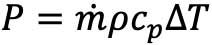 , to dissipate the same amount of power, an increase in density and heat capacity results in a lower delta T) leading to less reliance on other forms of cooling: e.g., compression and evaporative cooling; in the latter case, this leads to a design with lower water consumption.
The challenge is not just to provide more cooling, but to do so reliably. Deterioration in fluid quality, clogged filters, loss of flow, or episodes of thermal throttling can affect performance. Therefore, monitoring the temperature, pressure, and chemical quality of the coolant plays an essential role, even as the industry moves toward standardization of connectors, fluids, cold plates, CDUs, and maintenance procedures.
Although it may seem like a recent technology, cold plates have been used since the 1960s in aerospace and military applications and were present in large computer systems decades ago. As the thermal density of racks increases (driven today by AI infrastructure), liquid cooling will likely evolve from a specialized solution to a standard component of digital infrastructure.
ASHRAE continues to expand knowledge about new classes and thermal envelopes and to promote specifications and best practices to facilitate interoperability and manage risks. Liquid cooling’s ability to support higher densities, improve energy efficiency, and facilitate heat reuse strategies positions it as one of the key technologies for the next generation of data centers.
Authors: Alberto García Ramos (Aguilera Ingenieros) and Jaime Comella Gómez-Aller (DayOne), co-chairs of the ASHRAE Spain Chapter Data Centers Committee.
)
)
)
)
)
)
)
)
)
)
)
)
)
)
)
)
)
)
)
)
)
)
)
)
)
)
)
)
)
)
)
)
)
)